Author Archives: Diana

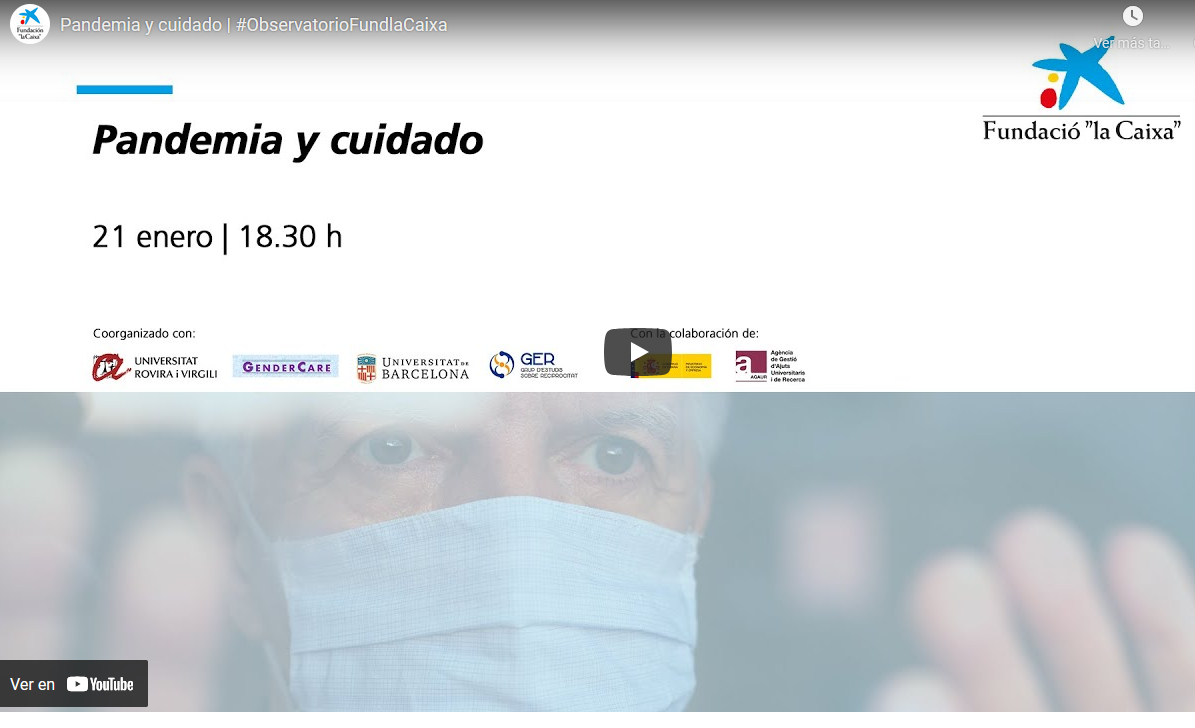
Pandemia y cuidado

Comencen les jornades de reflexió sobre la cura, como element polític i social, al Palau Macaya amb la Dolors Comas d’Argemir, de la Universitat Rovira i Virgili, la Sílvia Bofill, de la Universitat de Barcelona i la María Ángeles Durán. En aquesta primera sessió (dijous 21 a las 18.30h) tindrà lloc la conferència inaugural de les jornades de reflexió orientades a avançar cap a la democratizació de la cura. L’emergència sanitària generada per la COVID-19 ha posat de manifest la fragilitat de la organització social de la cura i la necessitat de situar-la al centre del debat social i polític per afrontar els reptes de l’envelliment de les nostres societats.

És una activitat presencial (amb totes les mesures de seguretat), gratuïta, però amb reserva prèvia que podeu fer aqui:

https://palaumacaya.org/ca/p/pandemia-i-cura_a13804241


Care as method

I am happy to participate in the workshop “Care as Method” taking place within the Conference “Geographies of Care“. I am looking forward to thinking and discussing with colleagues about the opportunities and challenges of care as method in social research.

The idea of caring (in) Academia is exciting but with care becoming a fashionable and mainstreamed term, I feel we need to remain alert about the risks of care becoming a buzzword, emptied of all its complex, relational and revolutionary elements. An example could be the issue of self-care, and how it is used sometimes in the individual(ized) entrepreneurial logics of the self in neoliberal Academia. (e.g. universities providing mindfulness and yoga classes) signals clearly this trend. To avoid these risks, I consider necessary:

  • To acknowledge all the previous work calling for a more caring Academia, many of which has been made by female (feminist) geographers: Martina Caretta, Victoria Lawson, Lisa Mountz… There is also relevant work on this by researchers using participatory methods and (feminist) anthropologists.
  • To problematize current calls to an “ethics of care” which do not address, previously or simultaneously, the way care is organized, the so-called care work. If demands for incorporating care in the way neoliberal university functions do not deal with structural issues, we are falling again into the tramp of offering individual solutions to structural problems. This will also increase the gap between established researchers who can afford to care for students and colleagues and those in precarious positions. Care takes time, effort and know-how, and if it is to be included into the way things operate within university, we cannot advocate for scholars to do it on their own. It is tremendously unfair to ask colleagues to be more caring with their students and in their virtual teaching for instance, when those colleagues may be pressed by caring demands of dependants at home, not been provided with internet or PC facilities by their universities, and the tenured-clocked not stopped during lockdown, among many other things. This way, scholars are asked, or expected, to do even more of what they were already doing without providing extra support (in terms of extra payment or time for instance).
  • Given how care is a feminized activity, it is important to point at the extra burden that asking for more caring relations within Academia may place on female academics. There is evidence that students and colleagues does not treat equally female and male lecturers/colleagues, with for instance teaching evaluations and expectations are gender-biased according to the instructor gender. Female academics are perceived as more easily approachable and often required to provide “care” for their students in a way males not. We need to overcome understandings of care as personal inclination and start thinking about it as a qualified activity that requires time, effort and skills.
  • To be aware that a caring university requires a caring society. Caring within Academia does not have to imply a trade-off with caring outside Academia, for scholars’ own dependants at home. So, for instance, taking care of dependants in a lockdown time, would not have negative impact on the academic career.

COVID, cuidados y procesos

Recibo estos días constantes invitaciones a participar con reflexiones, apuntes y notas sobre la situación de confinamiento debido al COVID-19 en la que nos encontramos. Veo académicos (habitualmente hombres) aprovechar estos momentos de cuarentena para poner en marcha interesantes proyectos de recolección de datos sobre lo que está pasando. A mi inicial malestar y auto-cuestionamiento sobre mi aparente falta de capacidades organizativas que hacen que no sea capaz de normalizar una situación excepcional y que se traducen en la absoluta imposibilidad de seguir trabajando como si nada en mis tareas académicas y docentes a la vez que cuidado de mi hija de dos años encerrada junto a mi en casa, le acompaña cada vez más la certeza de que volvemos a olvidar que cuidar es absolutamente imprescindible y que cuidar requiere tiempo, esfuerzo, presencia y saber hacer.

Cuidado por los y las estudiantes a quienes doy clase, con el consiguiente esfuerzo emocional y de tiempo necesario para recoger y acomodar sus necesidades en este momento.

Cuidado por las necesidades básicas de mi hija (ir a comprar y hacer la comida para alimentarnos, mantener niveles de orden y limpieza vivibles, dormirla, y otra miríada de acciones necesarias e invisibilizadas) pero también de su bienestar emocional en una situación que es especialmente dura para una niña de dos años que de un día para otro deja de poder salir a jugar al parque.

Cuidado por las compañeras y colegas en las que estoy en proyectos y que están pasando por momentos vitales duros.

Cuidar requiere estar, es puro proceso.

Si hace tiempo aprendí a desconfiar de currículums desproporcionadamente brillantes (y es cierto que he conocido personas que tienen esos currículums y no practican ninguna de las prácticas despreciables de abuso y pillaje con las que inflan sus méritos), esta crisis me está enseñando a repensar qué puede (o no) haber detrás de quienes rápidamente son capaces de proponer reflexiones sesudas e iniciar proyectos interesantes. Y si están para eso, ¿para qué no están? ¿A quiénes no están cuidando? No es baladí la cuestión. De hecho toca los cimientos mismos de un sistema que se basa en el resultado sin importar los procesos. En el finalismo del capitalismo que busca producir más y más barato sin importar cómo se lleve a cabo esa producción. En la academia que se guía por número total de publicaciones e índices de impacto y que es incapaz de incorporar medidas sobre el cómo se ha desarrollado la investigación en la relación con las personas con las que trabajamos, dentro y fuera del mundo académico. A mi el “qué” cada vez me dice menos sino va acompañado de información sobre el “cómo”. Cada vez estoy más enfocada en los procesos. Porque si lo pensamos, no hay objetivos en la vida, en el fondo, esta es única y exclusivamente proceso.
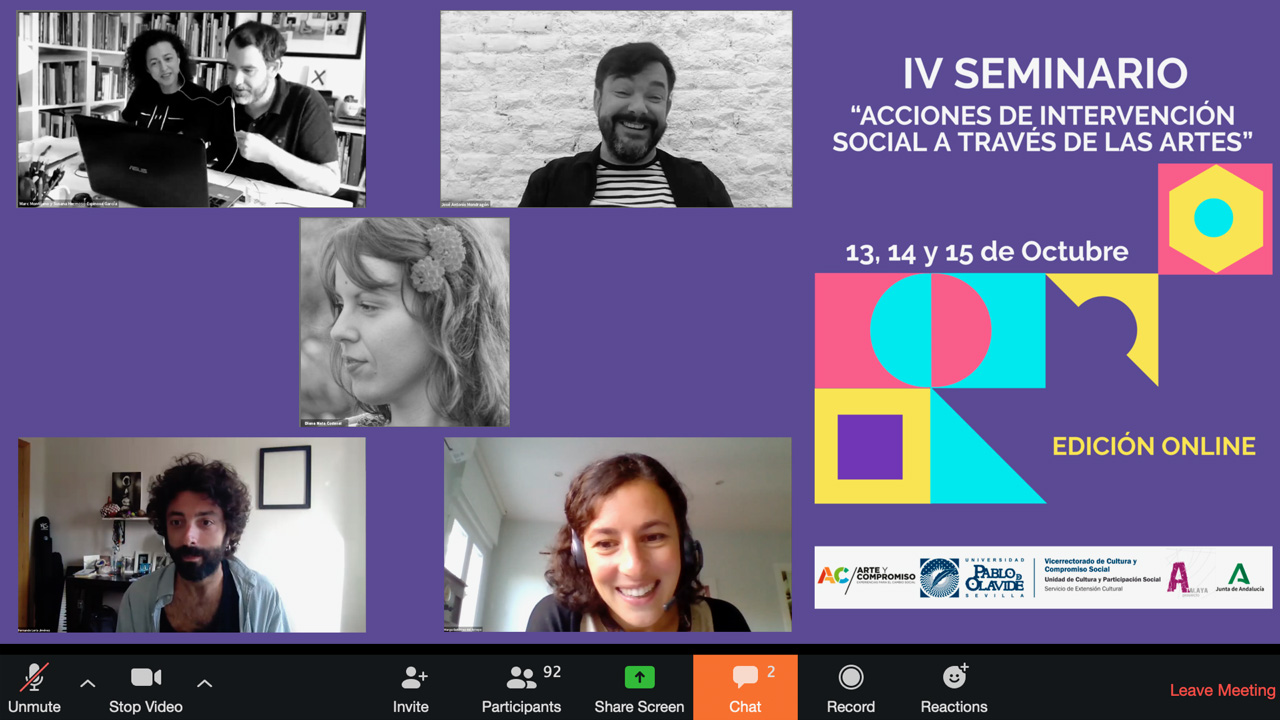
Acciones de Intervención Social a través de las Artes

Estoy encantada con la invitación que me ha hecho la Univerisdad Olavide de Sevilla para participar en su programa sobre Arte y Compromiso y poder compartir la experiencia de la Cámara a Cuestas, un proyecto colaborativo y experimental basado en la fotografía con mujeres migradas que desarrollé junto a increíbles colegas en Bilbao en 2015. Guardo especial cariño a este proyecto porque fue el primer proyectos participativo que desarrollé para dar respuesta a mi creciente incomodidad con el caracter extractivista de la producción académica de conocimiento y las características neoliberales de la producción del mismo. Despues vinieron muchas más cosas en esta línea de alianzas más allá del mundo universitario y las metodologías participativas que puedes ver en Metodologías Participativas.

Aquí podeis ver el programa de los dos días: Acciones de Intervención Social a través de las Artes. Será un reto y una gran oportunidad de compartir y aprender.


Precarietat i im/mobilitat al Primer Congrés Català d’Antropologia

ACTE INAUGURAL: Hegemonies, precarietats i dependències: els contextos de producció del coneixement antropològic

La taula de debat inaugural té com a objectiu plantejar una discussió sobre el marc actual de la recerca antropològica situant-la en el seu context social, polític, econòmic i afectiu d’emergència. Es tracta de visibilitzar i reflexionar sobre un conjunt de pràctiques que no conformen simplement el context exterior de la producció del coneixement, sinó que són una part indestriable d’aquest procés. Això implica pensar com, d’una banda, les condicions laborals, els requeriments de les convocatòries de finançament, l’oferta de places i llocs de treball, els criteris d’acreditació i avaluació de la producció científica i, de l’altra, l’increment de la burocratització, però també les trajectòries individuals, familiars i afectives, o la mobilitat acadèmica i personal, entre d’altres, són condicionants que determinen l’orientació i el desenvolupament de la investigació. Com es relacionen aquestes condicions de producció del coneixement antropològic amb les nostres pròpies recerques? Com les afecten? Com es construeixen i són travessades per determinants de gènere, de classe o d’origen ètnic, entre d’altres? A partir de la intervenció de tres persones amb trajectòries diferents dins d’aquest context, pretenem obrir un espai de debat i de reflexió conjunta sobre les circumstàncies que ens afecten col·lectivament com a comunitat professional i científica.

Participants
Diana Mata-Codesal Doctora per la Sussex University. Antiga investigadora postdoctoral a les universitats de Deusto, UNAM i Pompeu Fabra. Forma part de l’Observatori d’Antropologia del Conflicte Urbà (OACU) i del Grup de Recerca en Gènere, Identitat i Diversitat (GENI).
Giacomo Loperfido Doctor per l’EHESS i la Università degli Studi di Bergamo. Ha tingut una Post-Doctoral Research Fellow a la University of Fort Hare i una beca postdoctoral a la University of the Western Cape (Sud-àfrica). Ha estat investigador contractat pel projecte Grassroots Economics (GRECO) de l’European Research Council.
Jordi Gascón: Doctor per la UB. Ha treballat des del 1995 en l’àmbit de la cooperació internacional, on ha estat coordinador de l’àrea de projectes de la Xarxa de Consum Solidari i de l’àrea d’anàlisi del Foro de Turismo Responsable. Actualment és professor lector a la Universitat de Barcelona i forma part de l’Observatori de l’Alimentació (ODELA).
Modera: Camila del Mármol (UB)

Can we afford waiting?

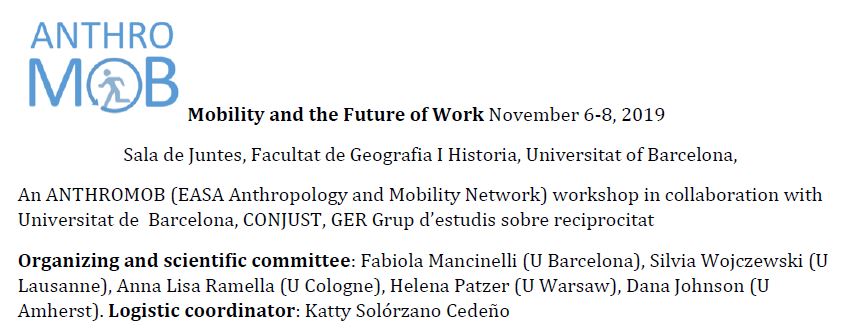
These are some of the considerations about waiting I presented as the keynote speaker recently at the ANTHROMOB international workshop on Mobility and the Future of Work.

Immobility and waiting have been often disregarded as irrelevant topics of study. In fact, waiting is often attached to those called left-behind, people who do not migrate but are part of families with migrant members. In particular women have often been perceived as “waiting penelopes” (Mata-Codesal 2016) from Homer’s Odyssey and the image of Penelope, who waits for her traveller Odysseus. The so-called Odysseus and Penelope syndromes are particularly illustrative of this: the former to name the feeling of displacement experienced by migrants, while the latter refers to the sense of abandonment experienced by migrants’ relatives. The impossible situation of waiting is sublimated and poeticized in this ancient epic, where love and faithfulness are able to overcome twenty years of separation. Penelope as the ‘left behind’ is commonly portrayed as passive, subordinated and lacking agency in their relatives’ mobility decisions. However, recent research questions the passive nature of the so-called left behind, and show the necessary roles they play in their relatives’ migratory projects and the development and maintenance of transnational social fields (Mata-Codesal 2015). People’s waiting for their relatives’ return may not just entail a passive inertial situation, in some cases we can even consider their waiting agential, active and intentional (Gray 2011), fulfilling essential tasks for the success of the migratory project.

Continue reading

Im/mobility and Waiting in Times of Uncertainty

anthromobI am honoured to be giving the keynote at the ANTHROMOB workshop on November 6th from 18.30 to 19.30 at University of Barcelona. I will be thinking aloud about im/mobility and waiting in times of uncertainty.

Migration studies were slow to incorporate immobility and non-migrants as proper research topics. There are by now convincing calls to continue with the incorporation of the motivations to, meanings of, conditions under which, and strategies to staying put vis-à-vis similar explorations regarding different types of spatial mobility (not only the one that crosses international borders). The need for this articulation is captured in the increasingly popular term im/mobility. The Mobilities perspective recognized from very early on that mobility requires “moorings”. The research agenda this turn set in motion became however too focused on developing a “nomadic metaphysics” and “mobile methods”. Consequently, stasis and the lack of movement have not received as much research attention as it was anticipated. In this presentation, I am concerned with the idea of waiting. In our era depicted as hyper mobile, and “owing to a predominant academic attention for ‘kinetic’ promises of transport and mobility”, waiting has not deserved much academic attention. At the best it is conceived in a very simplistic way as a waste of resources. But, can there be different ways of waiting? Can waiting, similarly to immobility, be a proper research object? And finally, can waiting be a useful concept to address life strategies and im/mobility decisions in a period of growing work precariousness and life uncertainty?

Renewing the migration debate

KNAW

Academy Colloquium ‘Renewing the migration debate: building disciplinary and geographical bridges to explain global migration’. Royal Netherlands Academy of Arts and Sciences, Amsterdam, 16–18 October 2019

I am so happy that I will be discussing the future of migration research with colleagues in a truly interesting event next 15th October in Amsterdam. I will be talking in the session about “Migration as a function of aspirations and capabilities – new conceptual developments of micro level migration drivers”. It is an honour to be able to share with Jorgen Carling (PRIO) and Karily Schewel and Hein de Haas (UvA) the future of two-step models. For those interested in this approach, the paper published by Carling and Schewel in 2018 provides a good overview of the state-of-the-art and challenges facing this approach.

It is however ironic been discussing the future of migration research in a moment I am forced to leave Academia. I hope it is only temporary.

Differentiation processes between non-native groups in a Barcelona neighbourhood

Who can be from a place where virtually everyone –or at least everyone’s parents or grandparents– come from somewhere else? Who are “we”, in such a context? And, what resources can such “we” claim rights over? Over two years, from 2016 to 2018, I explored these questions in a peripheral neighbourhood in the city of Barcelona. The area, which was traditionally subjected to territorial stigma, was built in its current shape by internal migrants coming to the city from other parts of Spain in the second half of the twentieth century. More recently, at the turn of the millennium, people coming from abroad moved in to this part of the city. In such a context, how do the more established groups differentiated themselves from the more recently arrived?

The research identified the boundary-work carried out by the more estabished group and how it is substantivized thanks to the Barcelona-wide “civic ideology”. This way the project  showed how concrete public policies and the rhetoric used to justify them serves as a resource for the articulation of social boundaries at the micro level.

By focusing on the discursive construction of we and them between internal and international migrants, the research contributes to the denaturalisation of the sometimes problematic clear-cut categorization between internal and international migration as King and Skeldon did in their fantastic 2010 article Mind the gap! Integrating Approaches to Internal and International Migration, and which is one of the negative consequences of the well-spread methodological nationalism in Migration Research (Wimmer and Glick Schiller 2002).

The article is coming soon in the prestigious journal Ethnic and Racial Studies!

https://doi.org/10.1080/01419870.2019.1599131